Showing posts with label RIO. Show all posts

Tuesday, 7 October 2014

Univers Zero - Heresie (1979)


 Having thought the debut album was unsurpassable the boy's go one better on this one. Denis's 'La Faulx' is a slow builder, the textures at the beginning are rich with wheezing bass Harmonium and Michel Berckmans Bassoon whilst Bassist Guy Segers incants in the background. Tracks 2 & 3 are the work of Roger Trigaux, later to produce a solo album called 'Triskadecaphobie' under the band name of Present. Entitled 'Jack the Ripper' & 'Vous le Saurez en Temps Voulu' once again Roger and the band excel themselves. Play it in the dark if you dare!

The music is incredible dark,sombre,as depressive as can be.Pessimism to the max!If someone informated me well than I believe that the texts are spoken in the languages of druids.Together with the slow creeping cello's and bassoon it createds an incredible anguished atmosphere.

Some people overemphasize the scary boogeyman nature of Univers Zero (usually to promote their virtues), I think, but certainly their music is quite moody and dark, and this is likely their darkest sounding record. All the pieces are slow and ponderous, with sustained, repetitive lines and harmonies that are often "dissonant" to traditionalist ears. Certainly you can hear the influence of interesting European composers like Bartok and Messiaen, as well as, if not Zeuhl, the same sort of avant-jazz sources as Magma was tapping. Reeds and strings are the lead instruments, making this more of a jazz/chamber fusion than anything to do with rock music in the usual sense. The kind of music that would be good scoring a old silent horror movie, this is definitely a classic of its genre- I have to be in the mood for it, but it fits that mood perfectly.Reviews from Progarchives.com


Songs / Tracks Listing
 1. La Faulx (25:18)
2. Jack the Ripper (13:29)
3. Vous le Saurez en Temps Voulu (12:56)
4. Chaos Hermetique (11:51) *


Line-up / Musicians Lineup on the original album:

- Michel Berckmans / bassoon, oboe
- Daniel Denis / drums, percussion
- Patrick Hanappier / viola, violin
- Roger Trigaux / guitar, piano, organ, harmonium
- Guy Segers / bass, voice

Lineup on the bonus track on the 2010 remaster:
- Daniel Denis / drums
- Patrick Hanappier / violin
- Guy Segers / bass
- Roger Trigaux / guitar
- Vincent Motoulle / keyboards

Monday, 28 July 2014

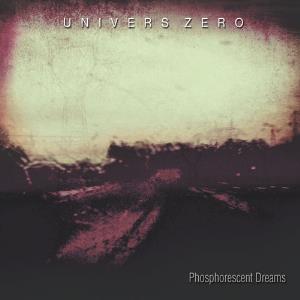
Univers Zero - Phosphorescent Dreams (2014)


Wow, this could be disputably the band's longest album title to date after their Ceux Du Dehors. Does this spell a change of attitude? Well DD certainly changed a few things in his lifelong project and maybe the most shocking one is the change of label. I'm still at odds at guessing why Daniel thought that he would get a better support than Feigelbaum's Cuneiform label, but the resulting album is not only a very expensive album, but it is not well distributed and not available widely on the web? and not at all in brick & mortar record store. Past that first consideration, the band's line- up has been revamped, with ex-PaNoPTiCoN and present day Wrong Object keyboardist Antoine Guenet and on guitar Nicolas Duchêne. Elsewhere, Dimitri Evers (bass, and Budé (winds) are alongside Daniel, but we're also seeing a few guests, such as sonny Nicola on drums for a track, and a horn section comprising of Hugues Tahon (trumpet) and Adrien Lambinet (trombone) on three tracks. Recorded and mixed at Didier De Roos's installations in Braine and Soignies throughout the second part of 2013, PD was released in January of the following year, with a post- atomic (or stormy) artwork, courtesy of Thierry Moreau.

Well, the corridor noises were that UZ's sound was (finally?) going to change a fair bit with the line- up changes and an electric guitar in the fold. The leastr we can say is that the sonic changes are not immediately audible, and maybe the prime culprit is the unchanged songwriting. Indeed seven tracks, ranging from almost-5 to almost-13-minutes, composed by Daniel (4 of them) and Kurt Dubé (the remaining three) are not much of a change in the light of UZ's overall discography. Are we looking at Clivages' obvious successor or at an Implosion-like venture? Little doubt that from the first notes of the 10-mins Shaking Hats, you're looking more at the first option than a divergence from the Universal (and absolute) Zero. Despite DD's French and Japanese liner notes as to turn the band to a more "electric sound" to remedy to what he was seeing the band's stagnation (my words, not his).

Technically, the electric guitar and keyboards (Pierre Chevalier was playing on digital synths anyway), but it's not like it brings a major contribution or change the band's soundscapes a great deal. My guess is that DD's near-pathological perfectionism saw that the band's impetus was waning and thought a revamp was needed. For the audible results on the album, I find the changes so un-remarkable that the risk he took angering the "sacked" long-standing Chevalier and Berckmans not worth it. I'm sure the former got over it (he's a busy man), but not nearly as sure for the later. As with the preceding Clivages and the anterior Implosion, UZ's general mood is relatively lighter than it was in the 80's and 90's, and though I wouldn't qualify PD of light-hearted danceable music, there are moments where a certain warmth reaches your vicinity. Of course, this doesn't apply for the sinister title track.

The big debate around RIO-heads is whether the very-high price of the album (and its shipping from Japan) is worth the investment. Obviously, if you're an unconditional UZ fan, it will be worth the important hassle and costs, but if you're a little more objective, you'll think twice or thrice before doing so, especially if you know that, outside the slight line-up change, Phosphorescent Dream is yet another "normal" UZ album. As such, I don't find it essential per se (the last to date was Implosion, IMHO), but it's a very worthy album nevertheless.Review from progarchives.com

Songs / Tracks Listing

1. Shaking Hats
2. Rêve Mécanique
3. Très Affables
4. Vocation
5. Les Voleurs d'Ombre
6. L'Espoir Perdu
7. Phosphorescent Dream

Line-up / Musicians

- Kurt Budé / clarinet, bass clarinet, alto and tenor saxophones and percussion
- Daniel Denis / drums and percussion
- Dimitri Evers / electric and fretless bass
- Nicolas Dechêne / electric and acoustic guitars
- Antoine Guenet / keyboard

Guest musicians:
- Nicolas Denis / drums and percussion (3)
- Hugues Tahon / trumpet (2, 6 & 7)
- Adrien Lambinet / trombone (2 & 6)

Saturday, 2 February 2013

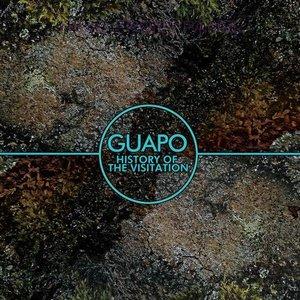
Guapo - History of the Visitation (2013)


Back in ancient music history (circa the late '90s), Guapo were regarded by some as "playful." After various lineup changes and albums like 2013's CD/DVD set History of the Visitation, this does not seem to be a particularly playful group -- unless a darkly hued outfit like Univers Zero could be considered playful. Now a quartet with drummer David J. Smith the only original member, Guapo are identified with the 21st century resurgence of Rock in Opposition avant-prog, a style/movement/community of which UZ were founding contributors during the late '70s. Whether Guapo consciously considered themselves part of the RIO lineage from the start, they seem willing to draw from the dark side of that lineage on History of the Visitation -- while incorporating myriad other musical elements into their proggy instrumental blend. The five-minute buildup of ominous orchestral tones and textures comprising the "Visitation" intro to 26-plus-minute album centerpiece/behemoth "The Pilman Radiant" culminates in a slow and eerie melodic fragment echoing not only a similar bit from "Jeweled Turtle," the leadoff track to Guapo's previous album, 2008's Elixirs, but also the equally unsettling start to "The Funeral Plain" from UZ's 1986 Heatwave. A deep irregular throbbing drone underpins sustained metallic oscillations -- as at least some of the album's seven guest musicians on a variety of reeds, brass, and strings are slowly buried by the onslaught -- before "The Divine Vessel" continues the suite with initially waltzy understatement; the Fender Rhodes of new keyboardist Emmett Elvin (replacing Daniel O'Sullivan) is supported by drummer Smith and bassist James Sedwards before guitarist Kavus Torabi burns his way into the arrangement with a sustained tone and deliberate ascending melodic line. Elvin rips into dramatic organ chords before the band plunges into a full-on rapid-tempo bridge and a rhythmically shifting space jam melding the introduction's ambient roar with an insistent hard rock pound and Fripp-ish repeating guitar line. "The Pilman Radiant" alternately slams, gallops, (intentionally) stumbles, and floats through its second half before returning to its midpoint theme, as Guapo display their affinity for "Larks' Tongues" and "Fracture"-era Crimson over UZ's more chamberesque side. "Complex #7" is another dark ambient foray into the "Visitation" zone, but the concluding "Tremors from the Future" is an altogether different machine, cruising through uptempo and even catchy segments -- Elvin's staccato attack on the keys would be downright funky if he were playing a clavinet. The companion DVD of Guapo live (with O'Sullivan on keys) is dominated by a very professional multi-camera video -- in arty black-and-white -- of the band performing "Five Suns" at NEARfest 2006; the performance careens toward proggy bombast, with Torabi in particular throwing himself into his (foot)work. Despite its inferior single-camera video (but fine audio mixing/mastering by Udi Koomran), the band's sparkle-shirted performance of Elixirs' "King Lindorm" at France's RIO festival the following year is a more nimble affair, with a greater measure of "avant" poured back into Guapo's avant-prog mix. ~ Dave Lynch review from RDIO

Songs / Tracks Listing

1. The Pillman Radiant (26:15)
i. Visitation
ii. The Divine Vessel
iii. Wriggling Mange
v. Divine Vessel's Repreise
2. Complex #7 (4:47)
3. Tremors from the Future (11:1

Total Time: 42:17


Line-up / Musicians

- Emmet Elvin / Fender rhodes, organ, synth, harmonium & screeching guitar (on "Visitation")
- James Sedwards / Bass
- Kavus Torabi / Guitar, santoor
- David J. Smith / Drum kit, percussion, additional keyboard, sanitoor

Sunday, 18 November 2012

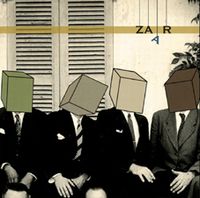
ZAAR - ZAAR (2006)


This French prog rock quartet, rising out of the ashes of Sotos, is built around brothers Yan Hazera and Michael Hazera on lead guitar and drums, respectively. The single-named Pairbon replaces Sotos' bassist, Bruno Camide; the cello and violin from the earlier group are replaced by a hurdy-gurdy played by Cosia (another single-named musician). Historically, the legacy of Magma has lain heavily on most French instrumental prog rock groups, but the Hazera brothers lighten up Magma's relentless, apocalyptic zeuhl sound with lots more space and some short acoustic pieces that demonstrate a refreshing willingness to move outside conventional prog rock boundaries. There are parallels here to Univers Zero's best work, especially on "Scherzo # C," where shifting time signatures and dissonant contrapuntal riffs create a challenging type of chamber rock. The two long pieces on the CD provide plenty of scope for drama, but both "Sefir" and "Omk" utilize a number of quiet interludes to both ratchet down the intensity and create expectations for what follows. As a result, the "payoff" becomes not the shrieking climax but, rather, all the adventures along the way. Cosia's use of the hurdy-gurdy is particularly creative on the opening piece. Although this instrument has folk and even medieval classical roots, the hurdy-gurdy on this CD seems to be subjected to various electronic treatments and some "outside" playing that occasionally suggests a small animal in distress. Indeed, Cosia's first solos almost seem to be generated by a Moog synthesizer or electronic oscillator, although he also displays the instrument's ability to produce bagpipe-like drones and later shows off its violin timbres (in essence, the hurdy-gurdy is a mechanical violin). It's hard to believe that all these sounds are generated by a single instrument (even a really strange one), although nothing on the CD cover or liner notes indicates otherwise. Overdubbing is a distinct possibility, of course -- and with all the contemporary devices available for a guitar to plug into, Yan Hazera could also be responsible for some of those mystery sounds. The second long piece, "Omk," reverses the roles initially, with Hazera soloing and Cosia providing the backing drone, but then Cosia takes over again with a moody solo that hovers between scraping violin and wheezy pump organ. Both long pieces also showcase the excellent staccato attack of drummer Michael Hazera, whose work can move beyond simple (or even complex) timekeeping and into improvisational territory that owes more to jazz than rock. This is a very sophisticated recording that deserves a wide audience. ~ Bill Tilland

Songs / Tracks Listing
1. Sëfir (20:07)
2. Zolg (1:59)
3. Ce n'est pas triste (2:42)
4. Tougoudougoum (1:29)
5. Discasambo (3:23)
6. Omk (17:20)
7. Scherzaaah (0:38)
8. Scherzo # C (4:45)
9. [...] (1:34)

Total Time: 53:54

 Line-up / Musicians
- Yan Hazera / guitar
- Michael Hazera / drums
- Cosia / Hurdy Gurdy
- Pairbon / bass, double-bass


Saturday, 17 November 2012

Guapo - Five Suns (2004)


This must be one of the most original releases I've heard since long time. Although I do recognize some elements from King Crimson's red and vroom period or even Anekdoten. Still there's more to it. The sound of this instrumental music is in between progressive/psychedelic and postrock from bands like "Explosions in the sky" or "Godspeed". It's post rock because of the melodies that slowly return on and on while the tension is building up. I would call it progressive rock because of the wall of sound and the excellent way the guys are handling their instruments. On "five suns part 2" for example there's the power from the guitar reminiscent to Sonic Youth, the powerful Wetton like bass lines and acrobat drums but on the other hand there's also a tiny sound of a hammond organ and a spooky mellotron. The combination of these very different ingredients gives a splendid result ! Needless to say this music is very basic and sober although quite detailed. Although I never listen more than a couple of songs at once, each track is compelling all the way. My personal favorite may be "Topan", a calm track with emphasis on the gentle Hammond sounds especially on the opening tones. Never heard anything from this band before so I can't compare this record to other Guapo releases but this is a fine and most original effort worth of checking out for those who like some instrumental, dark and powerful music. Prgarchives.com

Amazing album which is like a blistering King Crimson, Ruins and Anekdoten on steroids with heavy bass and full on mellotron, but theres also some excellent lighter progressive moments in here.A band to watch for sure.


Songs / Tracks Listing 

1. Five Suns - Part 1 (4:31)
2. Five Suns - Part 2 (10:19)
3. Five Suns - Part 3 (10:30)
4. Five Suns - Part 4 (12:57)
5. Five Suns - Part 5 (7:55)
6. [untitled] (1:00)
7. Mictlan (8:58)
8. Topan (6:37) 

Line-up / Musicians 

- Daniel O'Sullivan / Fender Rhodes, organ, Mellotron, harmonium, guitar, electronics
- Matt Thompson / bass, guitar, electronics
- Dave Smith / drums, percussion 


Sunday, 4 November 2012

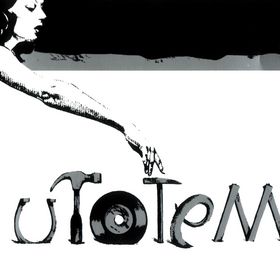
U Totem - U Totem (1990)


A Revelation.

Ever had one of those?

I had a few during my life; most occurred during dark, depressing or desperate times; others happened while listening to specific albums.

One such album was this one.

This revelation consists of the understanding that imagination and daring to explore are one of the great human traits; Understanding that music, at its most beautiful, whether complex or simple, can be a healer, a comforting friend, a motivator; Understanding that music can be a reason to live for, a purpose in life, a cause to get up in the morning and keep on living despite hardship.

Musicians from 5UU's and Motor Totemist Guild came together to create this masterpiece of an album and joined by other session musicians to complete the sound. I am having hard time expressing just how wonderful and special I find this album to be. It is one of those albums I feel a sort of catharsis while listening to it and want to start it over again when it ends. However, I feel un-equipped and not knowledgeable enough to write about this, but since I love this album so much, I'll give it a try and please forgive any mistake or nonsense I might write.

Instrumentation - Abundant and varied instrumentation makes this album a delight to listen to; so rich and smooth is the sound, along with Emily Hay's vocals. Saxophones, flute, piccolo, bassoon, contrabassoon, sitar, piano, vibraphone, guitar, bass, drums, percussion and the use of tape recordings - all those play the music, making it lively and special. Not only the type of music, the influences on composition, but the type of instruments are a look back at their influences which are I would guess 20 century composers (I am not an expert on this at all, but having read about and listened to some I would assume this is the case; Stravinsky would probably be one) and previous chamber rock groups.

The music has been said to be a mélange of 20th century classical music, avant-garde, rock, chamber music all mixed to an end result that is the special sound of U Totem. Well, yes but how to translate the greatness of this album into words? Complex, very well played, sophisticated and compelling, the music never ceases to amaze me. Just listen to "Both Your Houses" and how all the instruments combine together while the rhythm goes on. Not only shown by the complexity, the progressiveness of the music is shown also in how they ornament the songs with the instruments; in the intervals which are filled with the occasional "odd" sounds, atonal parts or "experiments"; they drift away with each song from the main theme to explore the grounds. Each song is cleverly orchestrated, maneuvered through the gushing waters, from one part where the classical instruments lead the way, into other parts, where the more "modern" rock instruments take over. With all this going about, the beauty is kept, the connecting musical thread is always there and the magic is never lost. The repetitive part in "Both Your Houses" around the fourth minute (before and after Emily screams her heart out in the background) is a fantastic example of how to play the same theme and make it sound great by changing the instruments and using whatever comes to mind (and using slightly different scales to create a seeming disharmony). Brilliant!

Take for instance "One Nail Draws Another" with its almost 15 minutes. It goes through so many different parts, uses so many elements of their influences, and yet there is not one boring moment, there is continuous movement, and constant progression while going back to visit the same themes as the song goes. Emily's vocals and the male opera-like vocals joining in the middle add to the richness already found in this song.

"Two Looks At One End" and Yellow Umbrella Gallery show their more modern influences, their avant-garde and quirky side (as if it wasn't enough as it is) and their use of the tape recordings and manipulation of the keyboards. Engaging and dynamic, weird and sometimes disharmonic, these pieces are enriched with the seemingly random use of the recorded sounds and voices and Emily's vocals (on that first track of the two).

Another thing to praise here is that each song is easily identifiable and different than the others. I don't sense a repetitiveness and yet the collection of songs and tracks fit very well together; each song brings its own approach (however slightly or not-so- slightly different than the others), making this collection of 7 songs feel as a whole - meaning, this feels like an album, and not like a collection put together.

This album might lead you to the US side of avant-rock/chamber-rock, if you haven't "visited" these realms already. Both the "donating" bands to U Totem are obvious bands to explore (although I much prefer this group or project), as well as Thinking Plague, whose In Extremis I think draws somewhat of an influence from this album.

To sum up, this is one of my all-time favourites. An album as rich in sound as it is special, complex, intriguing, thrilling, stimulating, exciting and whatever other adjectives you may want to add to it. Their sound mingling together music by 20th century composers, chamber rock and avant-garde is one that I treasure, and find beautiful, compelling. It was a revelation the first time I heard it; being struck by the combination of complexity, oddity and beauty, realizing how fantastic music can be when musicians take it to a ride through their wild imaginations and perform for us their vision.

Honestly, my words cannot do justice enough to this fabulous album and these fine musicians and composers. Reading this, I feel I have failed to pass on what goes through my mind when listening to this and more importantly what the music actually sounds like and how great it is. So I'll simply say that if you are a follower of this type of music, this is a must have album. If you are interested in checking this type of music, but don't yet feel comfortable enough in it or are new entirely, I would start elsewhere, and save this to later on when you can appreciate it fully and without trying to adjust to this type of music. It might take the pleasure of the album. But this is a mandatory stop station in your excursions throughout the avant-rock/chamber-rock (or whatever you want to call it) realm.

A must have!

Review from progarchives.com


Wednesday, 1 August 2012

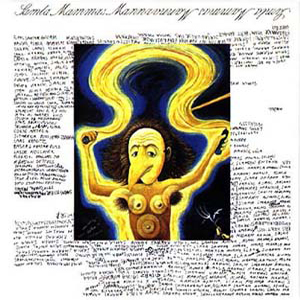
Samla Mammas Manna - Klossa Knapitet (1974)


Samla Mammas Manna's third album "Klossa Kanapitatet" finds them exploring their extravagant yet classy jazz oriented avant-garde prog a bit further than its brilliant predecessor "Maltid". The show is going on; here the listener will continue to find that bizarre mixture of jazz rock, Northern and Eastern European folk, circus music, dadaist absurdity (yodeling, falsettos, wicked funny twists), a mixture accomplished with both fluidity and musical genius. As always, keyboardist Lasse Hollmer acts as the leader of the instrumental approach with his piano melodies and chords, and some added touches on accordion, while guitarist Coste Apetrea displays his finesse from his lieutenant's position; meanwhile, the rhythm section lays a properly volatile foundation for their partners, when not collaborating on the enhancement of the melodic/harmonic side of the repertoire. Whenever the latter happens, it just seems so incredible how the band can sound so chaotically free and cleverly ordained at the same time, during a specific complex passage. Well, SMM is most certainly a particular pinnacle (yet to be discovered and appreciated by prog heads all over the world) in the history of prog. The 2-minute opener 'Ingenting' starts folkish and ends as a merry-go-round waltz (claps, whistling and humming included), only to be segued into 'Liten Dialektik', an amazing jazz driven piece that goes places on the basis of successive diverse musical motifs. 10 minutes and 10 seconds of pure prog genius. After such an impressive track, it would be hard for anyone to keep the listener's attention with the same degree of awe and amusement. anyone but the SMM, who then offers 'Sucken', a cryptic, brief excursion towards the low tones of acoustic guitar and piano, segued into the half- polka half-jazz 'Lang ner i ett Kaninhal'. And once again, for the third time in a row, a brief piece ('Kom lit narmare', actually more a comic gag than a proper track) is segued into a high-spirited jazz number with some combined nuances of rock'n'roll and ragtime somewhere in the middle ('Musmjiolkningmaskinen'). The fun never ends, indeed. The intro motif of 'Influenser' comprises the most dadaist passages and the most dissonant chord progressions in the album - enjoyable only by those who are already embedded with the spirit of SMM's music. It also contains some of the best soling by Apetrea. The title track is actually an accordion solo performed by guest Bryn Settels: the street sounds in the background create an intimate ambience, something that has actually been there all around. I mean, the experience of listening to this records makes you feel like you are part of a collective clever joke in a silly party. The closure 'Ramlösa Kvällar' shows the band at their most meditative: yes, they can get serious too, but of course, not without a touch of weirdness. The marching tempo of the final jazzy motif works as a most effective ending for a real Scandinavian musical gem, a prog masterpice, indeed. Review from progarchives.com

.

   DOWNLOAD                  

Tuesday, 1 November 2011

Art Zoyd -Le Champ Des Larmes (2006)

Art Zoyd Le Champ Des Larmes album cover


Songs / Tracks Listing
1. Fleuve-Bruit 1 (3:38)
2. Tenebrae
(3:05)
3. Eclats de souffle (3:02)
4. Tam-Feu (2:26)
5.
Incendium / GC_Sub (3:17)
6. Fleuve de Pluie / Fleuve-Bruit 2 (6:51)
7.
Achéron _ le Fleuve Obscur (9:16)
8. Murmur Fulminis / Totem 1
(2:13)
9. Abundans Civitas (5:02)
10. Laetitia / Totem 2 (2:28)
11.
Sepulchra / Fleuve-Bruit 3 (3:33)
12. Styx _ le Fleuve Noir (18:32)
13.
Le chant de la Méduse (2:26)
14. Egressus / Totem 3 (6:26)

Total
Time: 72:14


Tuesday, 9 August 2011

Art Zoyd - Faust (1995)


Initially I thought that the running streak of the first couple of albums had petered out by the later, more recent era of AZ, but having listened to this one a few times, I have been pleasantly surprised by the powerful material contained in this (I believe) score for a film...If this is not a score/soundtrack, well it sure sounds like it should be one. What we are dealing with is a musical collection so rich in sound and texture and ambience that the individual songs collectively convey a rich tapestry of images. Most are scorched earth and barren wastelands, dark corners; sinister, long, dimly lit hallways with voices echoing from nowhere. The story of Faust is centuries old, and a very potently symbolic tale of man's desire to know all, and the shortcut he is willing to take. In yearning for "the secrets" and pleasures of life, Faust had made a pact with the Devil (actually his representative, Mephistopheles) for said treasures, yet sealed his fate by turning over his soul in exchange, forever damning him. No doubt a strongly Christian, cautionary tale, warning of the road to excess and its damning consequences. I suppose a modern interpretation would be the southern "meeting the devil at the crossroads".

The music evokes the imagery so well in this album, that you feel as if you yourself are descending into the despair of an inescapable fatality.... The music starts immediately into a chilling descent, in the track "down" where the harmonies clash ever so slightly in such a way, building downward glissandi, in such a way that you are not quite sure if the pitch is descending, it is maddening and delirously dizzying- the way the music seems to bend downward, as if the protaganist (you) were being pulled into a descent of frustration, desperation, and madness. I must say this begins the nightmare rather well. This may just be the DARKEST album they have accomplished. Of the longer two songs on here (the rest are shorter segues of textural and subliminal, minimalistic and potently emotional bridges that blend into each other- each one a cliff-hanger setting you up impatiently, even cautiously for the next), Gate Of Darkness 1 is palpable in its building crescendo- erecting the very gates of an entry into the darkest concept imaginable... as if one were staring into a portal that accesses the very depths of a grand and beautifully terrifying hell. It is a curious vista, one which begs you enter it. It does not overstay its welcome. As I write this review, it is the day before Halloween (Samhain), and nothing could be more proper than the ritualistic invocation of the true concept of the once pagan holiday... utilizing dark music to set the scene.

Although for the most part I love this album, I find that a few of the songs unnecessarily repeat a groove or notion. There are however always leading voices over this groove that solo, yet I almost expect the music to follow a more bold classical feel, wherein the individual voices lead their own way, pulling in different sections, yet many of the undercurrents build a gently boiling progression that builds, but at times is almost anti-climactic. To its credit, there are many more exotic instruments used here... very mysterious feeling abound. The music here is more concerned with building an overall brooding feel.

I am impressed that the collective known as Art Zoyd have managed to modernize their sound in such a way that they obviously did their homework, by this I mean they were heavily influenced by industrial and IDM and electronic/experimental acts. The sounds used here are almost Musique Concrete meets drone and dark ambient. There is a lot of texture and implied rhythm and beats, making this more subliminal and slow-moving rather than immediate like most of their other albums. I suppose it helps to have been exposed to the forementioned styles of music- in order to appreciate this album more. They utilize a pounding rain in one track, with rhythmic thunder claps. Another track has a cawing crow. I thought I heard a zither, repeating a haunting arpeggio.

In the song Pact, you feel as if the deal is sealed with the appearance of dark minions crawling on the floor towards you, branding your soul as you sign in blood. Although a short movement, the track Irruption is a clanging, pounding, demonic and metallic (in the sense that it sounds like a punishing heavy metal track, yet more industrial) passage that I wish they would have fleshed out more. It is intense and very driving. Dies Irae (day of wrath) is another favorite song, once again evoking the essence of an apocalyptic embodiment. Essaim, which is basically a word for a swarm of insects, constructs that very notion. It is like a manifestation of a plague. I actually imagined more of a "lord of the flies" sort of image, like the coalescence of flies, constructing the devil himself. It is a very rousing track. Accelerando is, just as the title suggests, a song that builds from a slow pulse of chimes in the fore with bass thump in the back, the rhythm of the chime multiplies exponentially every couple of measures and then subsides; then the bass takes its turn... the song ebbs and flows in the fashion.... building building building and releasing (etc.) As stated, many of the tracks are withdrawn and scared, quietly

Overall I would say that this album utilizes the ambient and chilling elements that make Art Zoyd so engrossing... I imagine that experimental Norwegian act Ulver has listened to this band at length... as they use some of the same tricks of suspense and impact through layering and building. This is the french equivalent of a horror soundtrack, although not cheesy. Its unfortunate that more people have not given this one a chance. I find that I enjoy horror movies quite a bit for the score... the way it manipulates your emotions and lends a real sense to the scenes that flash by, without which you would probably laugh at implied horrors. This album is oozing infection and erosion. ART ZOYD Faust music review by avalanchemastercrawling...


Art Zoyd - Gates of Darkness I

Songs / Tracks Listing
1. Down (5:23)
2. Gates of Darkness 1 (8:10)
3. Flask (2:44)
4. Plague (1:49)
5. Faust (3:31)
6. Marais (2:10)
7. Parole (1:36)
8. Pact (3:25)
9. Bruissement (3:21)
10. Essaim (1:40)
11. Irruption (0:31)
12. Gates of Darkness 2 (4:01)
13. Pavan (4:02)
14. Dies Irae (3:57)
15. Procession (2:09)
16. Easter (2:26)
17. Marthe (1:44)
18. Games (3:46)
19. Intrigues (3:38)
20. Accelerando (11:51)

Total Time: 71:54

Line-up / Musicians
- Patricia Dallio / keyboards, samplers
- Daniel Denis / percussion, keyboards, samplers

- Gérard Hourbette / keyboards, percussion, samplers
- Thierry Zaboitzeff / cello, bass guitar, vocals, keyboards, samplers, percussion


Thursday, 28 July 2011

Univers Zero - 1313 (1977)


Back in the days when a prog fan had to seek out their fare, struggling to find those little prizes, the endless quest, personal and financial sacrifice and constant scorn from a Steve Miller and Carpenters-loving world, Univers Zero was no joke. Startling, brave and years ahead of their time, percussionist Daniel Denis led a chamber septet that rocked, or a rock band that liked to play parlour music... or both, and its history is crucial to the development of European progressive and avant garde music. Their roots began in 1970 with Arkham, the black and brooding Brussels group who traced their inspirations to the Canterbury school in England, particularly Soft Machine and its minimal jazz-rock adventures. Arkham's final concert took place in 1972 and its members went on to play with such legendary acts as Magma, Aksak Maboul, and Pazop. Daniel Denis formed Necronomicon (not the German band) with Claude Deron, finally emerging as Univers Zero in 1974. By 1977 he had some very good help from guitarist Roger Trigaux, bassoon player Michel Berckmans, violinists Marcel Dufrane and Patrick Hanappier, bassist Christian Genet and harmonium player Emmanuel Nicaise. This line-up would produce a music so new and disturbing that it would set the tone for much of the Rock In Opposition that came after, an influence that is deeply felt even today.

On their debut '1313', an unnerving violin and its bassoon counterpart sputter to life, followed by a twisted lot of various strings and trashed drums sounding like a makeshift set of kitchen utensils for the 14-minute 'Ronde', off-putting, squeaky and fantastically progressive. Daniel Denis and friends clearly wanted something more-- to split music apart, bring it back together and revel in the pain of that process. And though the pieces are entirely acoustic chamber music played with precision, the Zeroes did it with a rock spirit no less bare-knuckled than any of their contemporaries. 'Carabosse' murmurs with psychotic tendencies, and 'Docteur Petiot' has the band letting go with inspired darkness, nightmarish delirium, broken toys, and shades of Bartok and fellow Belgian composer Albert Huybrechts. 'Malaise' plays out like a drug withdrawl and 'Complainte' rusts its way out of this troubled record, and us with it.

Progressive Rock in the truest sense, doom music for grown-ups, every fan should have some Univers Zero around... you have to. It's the law UNIVERS ZERO Univers Zero (1313) music reviews and MP3 Review from progarchives.com

Songs / Tracks Listing 1. Ronde (15:08)
2. Carabosse (3:40)
3. Docteur Petiot (7:32)
4. Malaise (7:32)
5. Complainte (3:18)

Total Time: 36:50

Line-up / Musicians
- Michel Berckmans / bassoon
- Daniel Denis / percussion
- Marcel Dufrane / violin
- Christian Genet / bass
- Patrick Hanappier / violin, viola, pocket cello
- Emmanuel Nicaise / harmonium, spinet
- Roger Trigaux / guitaLine-up / Musicians


Monday, 25 July 2011

Univers Zero - Rhythmix (2002)

By the time this thing came out, I was completely primed for it. I'd become immersed in Univers Zero, and finally come to appreciate the nuances of The Hard Quest as compared to their earlier work. I knew it would take a few listens to grasp the work as a whole, and sat patiently through my first listen, waiting for the defining moment.

The first thing that struck me was the addition of so much extra instrumentation. The return of cello was nice, and flute and accordion were presented with a subtle enough touch as to be virtually transparent. The kickers, though, are trumpet (!) and acoustic guitar. Christophe Pons' guitar work on "Rouages: Second Rotation" saved the sequel from tedium. After several listens, I can no longer decide if I like the original better, and the guitar has everything to do with that.

The defining moment comes with the opening of "The Fly-Toxmen's Land". As soon as it started I thought "This is it!", and was blown away by every note of it. The trumpet's arrival is absolutely jarring, which is fitting for such a brutal composition. New bassist Eric Plantain holds his own with spidery bass fingering against Denis' rampant thumping, while the winds and percussion swirl around like dreams of angry lactating bats. Before long (I wish it were longer!), the whole thing shifts into a melancholic coda, with the trumpet resurfacing in a much less piercing fashion. Denis' drums take on a more direct approach, with bass and keys repeating a daunting riff. I must admit that I only listened to this one song for months after buying the CD. Five minutes was just not long enough.

All in all, Rhythmix holds up to modern Univers Zero standards. Berckmans' style is very present, and the structure throughout the CD never falters. I suppose one could credit the somewhat more subdued pieces to 'maturity', but I'd say they hold up to moments on Heresie and 1313, which aren't exactly infantile works. While there may be more to appreciate with the early works, this CD is perhaps more accessible to new listeners, and not a disappointment to old fans. Ground and Sky review - Univers Zero - Rhythmix

Songs / Tracks Listing
1. Terres Noires (6:06)
2. Rêve Cyclique (5:53)
3. Rouages: Second Rotation (3:38)
4. The Invisible Light (3:09)
5. Phobia (5:31)
6. Zorgh March (3:23)
7. Zébulon (2:19)
8. Forêt Inviolée (2:19)
9. Shangaï's Digital Talks (4:48)
10. Emotions Galactiques (5:47)
11. Waiting for the Sun (3:16)
12. The Fly-Toxmen's Land (4:50)
13. Rêve Cyclique (0:50)

Total Time: 51:59
Line-up / Musicians - Daniel Denis / drums, percussion, keyboards
- Michel Berckmans horns and wind instruments
- Eric Plantain / bass
- Bart Quartier / marimba, other percussion


Saturday, 26 March 2011

Akineton Retard - Akineton Ao Vio (2005)


I think, at the moment is the best album of the band were you can see them improvising, they play all the first album "AKINETON RETARD" without the last song"Aquelarre Satiri Sarnaz", the most part of the second "AKRANANIA" album, a very good selection of their third album "21 CANAPES" and a new song called "CANSANCIO" wich is a master pice. AKINETÓN RETARD Akinetón Ao Vivo music review by The letters ( Review from progarchives.com)

Songs / Tracks Listing
CD 1
1. Morricoleman (3:50)
2. Primogenia Satiria (10:24)
3. Pilotos de Califont (2:00)
4. Blues en Re (8:51)
5. Viaje a Erlebnis (3:48)
6. Cansancio (9:58)
7. Pana Fanal (1:45)
8. Mamut y Milodones (4:58)
9. Copenhaguen Schtorba (8:27)

CD 2
1. Survector (4:19)
2. Potenzia (4:04)
3. Senorita depresión (2:48)
4. Cocodrilos con Martini (2:58)
5. Akinefrón (4:18)
6. Cadencia Urmana (5:24)
7. Hawai (3:29)
8. Oruro's (2:12)
9. Fana Papal y el Monsenor Smegma Nazzi (0:43)
10. Nimboestrato (3:30)
11. Gansos, patos y gallinas (9:39)
12. Dementia Absorbant (8:38)

Total Time: 106:03
Live, released in 2005

Songs / Tracks Listing
CD 1 (54:01)
1. Morricoleman (3:50)
2. Primogenia Satiria (10:24)
3. Pilotos de Califont (2:00)
4. Blues en Re (8:51)
5. Viaje a Erlebnis (3:48)
6. Cansancio (9:58)
7. Pana Fanal (1:45)
8. Mamut y Milodones (4:58)
9. Copenhaguen Schtorba (8:27)

CD 2 (52:02)
1. Survector (4:19)
2. Potenzia (4:04)
3. Senorita depresión (2:48)
4. Cocodrilos con Martini (2:58)
5. Akinefrón (4:18)
6. Cadencia Urmana (5:24)
7. Hawai (3:29)
8. Oruro's (2:12)
9. Fana Papal y el Monsenor Smegma Nazzi (0:43)
10. Nimboestrato (3:30)
11. Gansos, patos y gallinas (9:39)
12. Dementia Absorbant (8:38)

Total Time: 106:03
Line-up / Musicians
- Bolshek Tradib / drums
- Edén Ocsarrak / Soprano & Tenor saxophone, vocals
- Estratos Akrias / Soprano & Tenor saxophone, vocals
- Lectra Celdrëj / electric bass
- Tanderal Anfurness / electric guitar, vocals


Akineton Retard - Mamut y Milodones


Akinetón Retard - Presentcion AO VIVO


Sunday, 13 March 2011

Art Zoyd - Nosferatu (1989)


This is the first of three soundtracks ART ZOYD did for those silent horror movies of the twenties.This one is for F.W. Murnau's 1922 released movie called "Nosferatu" which was based on Bram Stoker's book called "Dracula".Interesting that Stoker's widow sued Murnau for copyright infringement and won.All copies of his movie were destroyed although bootleg copies survived.The lineup on this album is the same as on the previous one "Berlin".I have to say off the top that this surpassed my expectations by a wide margin.This is incredible! In fact i'd like to quote some of Kai Karmanheimo's thoughts because he says it so perfectly: "Dissonance is prolific,tonality itself unstable and hummability lies dead in it's coffin,but instead of chaotic and cacophonous,the music comes across as rigorously regimented and ruthlessly repetitive,with individual instrumental links subjugated and blurring together to create a singularly sinister impression". He goes on to say : "...it's the choice of timbres,the sizzle of sinister electronics,that sustain the music through minimilist episodes and obsessive repetition and makes "Nosferatu" more interesting in my ears than ART ZOYD's earlier,predominantly acoustic works that i have heard".So we get 17 tracks at almost 53 minutes and three bonus tracks from a ballet called "Vornange" they did a year earlier.Those three tracks give us over 17 minutes of excellent bonus material.Hourbette composed 8 of the tracks on "Nosferatu" with Zaboitzeff composing the other 9 songs. "L'oef Du Serpent" opens with a dark atmosphere and percussion before this almost buzzing sound comes in.This is a powerful soundscape that will make you restless. "L'agent Renfield" is also dark and haunting before it calms right down.Strings before 2 minutes as it turns dark and creepy.Sounds like a beast is on the prowl.I don't think his name is Edward either.A calm with piano ends it as the danger has passed. "Le Voyage De Harker" is eerie with outbursts that are alarming to say the least.We start to get a rhythm that sounds like the train to hell.It's like your too afraid to move but you can't stay where you are.This is freaking scary! Chimes on the next short track before we get to the wind blowing(it's like there's voices in the wind or is that my imagination) on "Le Chateau" with loud sounds coming and going.Then we hear the birds chirping 2 minutes in with flute,bass and strings to follow.Morning has come and the danger has again passed for now. 'Nosferatu" has these striking abrasive sounds with strings.This is all very disturbing. "L'oeuf Du Serpent II" is what i'm sure fear sounds like. "Rumeurs" opens with percussion and other unpleasant sounds,then that wind starts blowing again with those voices crying out in horror.Or is that my mind playing tricks again. "Rumeurs II" has lots of atmosphere and it's not enjoyable. Pulsating sounds on "Anaphase" and other creepy sounds that will make your hair stand up before "Le Maitre Arrive" takes over.Cold piano lines and vocal melodies early before it changes to a fuller and richer sound.Back to the keys and vocal melodies to end it. "Rumeurs III" has these deep throaty spoken words part way through before we get a children's choir with keys then sax."Les Docteurs" is almost catchy with that slow rhythm. Samples of a woman talking and birds chirping on "La Peste". "Livre Des Vampires" is scary."Anaphase II" is darker with percussion and sax.Powerful. "Le Maitre Vit Mort" is dramatic yet melancholic.Then flurries of piano with weird vocal samples take over. I'll be breaking this out on halloween this year.I still think "Berlin" is better but man this is impressive. ART ZOYD Nosferatu music reviews and MP3 (Review from progarchives.com)

Songs / Tracks Listing

1. L'oeuf du serpent (3:40)
2. L'agent Renfield (3:17)
3. Le voyage de Harker (4:03)
4.Le matin (1:40)
5. Le château (4:14)
6. Nosferatu (2:42)
7. L'oeuf du serpent II (3:00)
8. Rumeurs (2:35)
9. Rumeurs II (2:56)
10. Anaphase (4:08)
11. Le maitre arrive (2:24)
12. Rumeurs III (2:39)
13. Les docteurs (2:28)
14. La peste (3:14)
15. Livre des vampires (1:47)
16. Anaphase II (4:38)
17. Le maitre est mort (3:23)

Total Time: 52:48
Line-up / Musicians
- Patricia Dallio / pianos, keyboards
- Gérard Hourbette / viola, violin, pianos, keyboards, percussion
- André Mergenthaler / cello, alto sax, bass vocals
- Thierry Zaboitzeff / cello, bass guitar, vocals, tapes, keyboards, percussion


Wednesday, 2 March 2011

Zamla Mammaz Manna - Schlargerns Mystik (1978)


This is one fine parody of the Swedish music scene of the time with many catchy and quite ridiculous tracks. Schlagerns Mystik (The Mystery Of Schlager) is definitely closer to the humor that I associate with Frank Zappa than any incarnation of a Lars Hollmer band. The album is split into two sides where the first one consists entirely of smart parodies of popular Swedish folk tunes. I guess that the genius of the lyrics might get lost in translation but the music is still a real treat for the ears.

The second side consists entirely of one 17-minute instrumental composition entitled Ödet (The Fate) and is anything but parody! This is where the guys get serious and make some fine progressive jamming music that in my opinion resembles Zappas 13-minute The Grand Wazoo-suite.

In conclusion I must warn that this might be acquired taste for fans of the classic prog-rock but if you are a fan of Zappa and seek something exciting to sink your teeth into then by all means try this.

***** star songs: Vid Ragunda (1:37) Årstidsvisan (3:48) Asfaltvisan (1:52)

**** star songs: Profession Är Amatörens Lim (2:20) Knapplösa (2:15) Liten Karin (4:15) Joosan Lost (0:25) Ödet (17:00)

*** star songs: Inte Margareta (3:47)
ZAMLA MAMMAZ MANNA Schlagerns Mystik music reviews and MP3 (Review from Progarchives.com)

Songs / Tracks Listing
1. At Ragunda (1:37)
2. Seasonsong (3:48)
3. Proffesion is the Amateur's Glue (2:20)
4. Buttonless (2:15)
5. Not Margareta (3:47)
6. Little Karin (4:15)
7. Asphaltsong (1:52)
8. Joosan Lost (0:25)
9. The Fate (17:00)

Total time: 37:19

Line-up / Musicians
- Hans Bruniusson / drums, xylophone, chimes, vibraphone, song
- Eino Haapala / electric guitar, acoustic guitar, vibraphone, song
- Lars Hollmer / electric piano, Korg polyphonic, Hohner-symphonic grand piano, accordion, song
- Lars Krantz / electric bass, double-bass, acoustic guitar, song


Zamla Mammaz manna - little karin


Download mp3

Sunday, 27 February 2011

Guapo - Elixirs (2008)


After two amazing albums "Five Suns" and "Black Oni", both of them virtually impossible to beat or equal, Guapo kept evolving and creating great avant-prog music, which ultimately was delivered in their 2008's album "Elixirs". With a permanent guitar player and a new bassist on board, Guapo now reveals itself as an ensemble decided to explore predominantly subtle atmospheres and deceitfully relaxed. The post-rock element had been a nuance in "Black Oni", but in "Elixirs" it has become a relevant presence in the band's refurbished sound. This is still genuinely zheul, but clearly with a more elaborate work of grayish textures, not only based on a bigger influence from the post-rock standard, but also Arabic/North African-inspired exotic sonorities. This less explosive approach to Guapo's archetypical exploration of neurotic, dark, disturbing sonic displays helps the band to focus on the mysterious side of their music with an enhanced fruition. This is pretty obvious from the opening track 'Jeweled Turtle', whose initial languid mood feels powerfully focused on the drumming's ritualistic cadence, making it sound like a procession of lost ghosts. The guest violin and viola gradually take center stage until things become patently dramatic, especially during the second half - the additional Arabic undertones reinforce the black magic aura instilled in the track's nucleus. Track 2 'Arthur, Elsie and France' is more vital, set on a jazz-rock scheme for a Magma-meets-Present excursion in which organic tension and cacophony alternate fluidly. The keyboard and bass inputs remind us closely to Guapo's previous albums, but Smith's drumming bears enough versatility and subtlety as to keep things reasonably constrained (yet still explosive). Tracks 3 and 4 are parts of a concept titled 'Twisted Stems', both being sung tracks: 'The Heliotrope' has a slow, relaxing acid-jazz mood that evokes a modernized Robert Wyatt, while 'The Selenotrope' is slightly more oppressive, with a bit of sensuality (something like Portishead-meets-Sigur Rós). 'The Planks' is the briefest and most upbeat piece in the album: with its very ethnic main motif, the band manages to bring an optimistic, catchy vibe without giving up on their penchant for mysterious atmospheres and experimental ideas. The last 15 minutes are occupied by 'King Lindrom', which gets started with a psychedelic deconstruction of Far East moods (I am inclined to notice the legacy of "Ummagumma"-era Pink Floyd and early Amon Duul on this one). Once the electric piano sets the initial cadences for the center section, it won't be long before the whole band displays yet another example of zheul/post-rock tension. Right before minute 8, a new motif arrives to increase and release a sonic power that until now had remained partially latent. The rhythm duo's jazz-inspired labor and the creepy guitar lead deserve special mentions. At minute 11 ½, things return to calmer moods in order to set the pace for the coda (a reprise of the introductory section). While not equaling the electrifying fire of "Five Suns" or the special witchcraft of "Black Oni", "Elixirs" still represents the excellence of Guapo's musical vision - this is likely to become a very featured album in prog circles for the year 2008.GUAPO Elixirs music reviews and MP3 ( Review from Progarchives.com)


Songs / Tracks Listing 1. Jeweled Turtle (13:09)
2. Arthur, Elsie And Frances (10:53)
3. Twisted Stems: The Heliotrope (7:32)
4. Twisted Stems: The Selenotrope (7:45)
5. The Planks (3:11)
6. King Lindorm (15:40)

Total Time 58:10

Line-up / Musicians
- Daniel O'Sullivan / Fender Rhodes, piano, bass, guitars, harmonium, modular synthesisers, autoharp, voice, electronics
- David J.Smith / drum kit, percussion

Guest musicians:
- Sarah Hubrich / Violin, Viola (The Jewelled Turtle)
- Alexander Tucker / Voices (The Heliotrope)
- Jarboe / Voices (The Selenetrope)


GUAPO "Arthur, Elsie and Frances"


Guapo - Jeweled Turtle


Download mp3

Tuesday, 22 February 2011

Present - High Infidelity (2001)


This fifth studio album (the third since their reformation) sees Present progress yet some more in the complex RIO and Zeuhl world, that they are building with every album of theirs. The groups is now in an extended form with with a sring and brass section, but is most are presented as full members, the main quartet of Trigaux (father and son), Chevalier and drummer Dave Kerman is still the heart and soul of the band. Macksoud , the bassist is a regular with band today. A rather bizarre sombre almost underground artwork (a collage of Israeli or Palestinian streets night scene) certainly sets the sombre mood of the album, but the album is not really any darker than the previous ones.

From the opening six-parts suite Soul For Sale (27 min+) with its insane and oppressive groove on which both father and son pull some searing guitar lines that even Fripp would love to have written, is constantly shifting and twisting almost uncontrollably sometimes reminding you Magma. The brass section adds more than a bit of variety in the soloing, and certainly is used for full drama as underlining the constant tension.

The two-parts 11 minutes Strychnine For Christmas (under-titled The Truth About Santa Claus) penned by Pierre Chevalier, is softly underscored by a rare Mellotron behind a rather distant Crimson influence, but the vocals are certainly perfectible (English lyrics and vocals from Kerman). Third and last track, written by Trigaux, is the Rêve De Fer (Iron dream) , but it has not metallic intention, but finishes as a tribute to a well known theme (get the album to unveil the suspense ;-) with Belew-Fripp interplay.

Yet another stunning work (if a little repetitive) from the Trigaux gang, this album has been released ion the small Belgian Carbon 7 label (who handles also Aka Moon), and it is one of the better moments in Present's career. The group has for manager ex-bassist Guy Segers, now. Not groundbreaking anymore, this is yet another typical Present album, even if they keep on progressing musically. ( review from progarchives.com )

Songs / Tracks Listing

1. Souls For Sale (1) 3:16
2. Souls For Sale (2) 3:26
3. Souls For Sale (3) 3:41
4. Souls For Sale (4) 5:29
5. Souls For Sale (5) 4:57
6. Souls For Sale (6) 6:47
7. Strychnine For Christmas (1) 3:57
8. Strychnine For Christmas (2) 7:00
9. Reve De Fer 9:23

Total Time: 47:56


Line-up / Musicians

- Roger Trigaux / guitar, vocal
- Reginald Trigaux / guitar, vocal
- Pierre Chevalier / piano, keyboards, organ, mellotron, vocal
- Dave Kerman / drums, percussion, vocal
- Keith Macksoud / bass
- Matthieu Safatly / cello, vocal
- Fred Becker / alto & tenor sax
- Dominic Ntoumos / trumpet, flugelhorn
- Udi Koomran / sound

Guest musicians:
- Yuval Mesner / cello
- Meidad Zaharia / accordion


Present - Strychnine For Christmas

Sunday, 20 February 2011

Art Zoyd - Generations Sans Futur (1980)


Third album from this Northern French group and maybe my fave (so far anyway). Recorded just before they re-record their first Oeuvre, Art Zoyd was now reaching their stride with an incredibly fast pace of album release for the kind of music and compared to their rivals (Univers Zero, Present, Henry Cow and other RIO groups were releasing an album every two years). Although there is a similarity in the subject of this album and their debut (Le Jour Où Brûleront Les Cités), unlike the debut, this third album does not appear to be a concept album, but most of it seems axed towards urban themes and the lack of perspectives and its false evasions. Again Daniel Denis (Univers Zero) participates to this album, but this time without Berckmans.

The album starts with the almost-sidelong La Ville, a grandiose tale of urban bizarrerie with many outstanding and brilliant moments: a haunting intro, insane wind-instrument noises, with strange whispering vocals, bass-driven pulses leading into an inferno and tormented street hells, broken down buildings, armed thievery, unnecessary violence etc.. All of this without one single written lyric or one sung phrase. The first side of the album ends in a short (throwaway?) fast-paced piece, a rare track penned by saxman Renard.

If with their debut Symphonie, Hourbette was the only composer, and with Odyssée, Zaboitzeff had written one track, by the time of this album, the composing time was almost equally shared between them two, leaving Renard and Eckert (the guitarist) a little space of their own. So the second side of Génération is mostly penned by Zaboitzeff and it is rather evident, even if both "songwriters" are making a concerted effort. The almost 10-min title track is taking its sweet time, eyeing on the sombre and almost macabre climates found on UZ's Hérésie. Divertissement depicts the leisure times that mankind use (and abuse) to display their own fortunes, or avoid thinking of lack of fortune or even forgetting their mis-fortunes. Rounding of the album is Eckert's Trois Miniatures, a reflective piece featuring classic piano and a jazzy guitar, refereed by .a neutral violin.

As far as this reviewer is concerned, Génération Sans Futur is AZ's best work, a point of view not always shared by other Zoydheads, but no matter what can be said of the early AZ albums, none are easily accessible and the music's hidden resources only appear after at least a few listens. ( Review from Progarchives.com. )

Songs / Tracks Listing

1. La Ville (16:50)

2. Speedy Gonzalez (2:55)

3. Génération Sans Futur (9:40)

4. Divertissement (6:45)

5. Trois Miniatures (5:12)

Bonus Tracks:

6. Sangria (2:27)

7. Manège (12:34)

8. Ba Benzele (8:00)

9. Golf Drouot 72 (4:06)


Total Time: 68:19


Line-up / Musicians

- Patricia Dallio / grand piano, electric piano

- Daniel Denis / percussion

- Alain Eckert / guitar, voices

- Gérard Hourbette / viola, violin

- Gilles Renard / saxophones

- Jean-Pierre Soarez / trumpet, percussion

- Thierry Zaboitzeff / bass guitar, cello, voices


Download mp3

Monday, 22 November 2010

Art Zoyd - Phase IV (1982)


For me one of Art Zoyds best and strongest albums which marked the end of there more chamber classical RIO sound with real instruments.

 A good deal miimalistic with lots of repetition this album is  expertly and hypnoticaly integrated with its canvas of rich instrumentation. 

 Highlights as ever are the Thierry Zaboitzeff pieces ( especially the opening track ) with his excellent bass guitar work.

Songs / Tracks Listing 
1. État D'Urgence (14:38)

2. Naufrage (6:41)
3. Dernière Danse (4:33)
4. Deux Préludes (2:05)
5. La Musique D'Erich Faes (Collective Improvisation) (0:14)
6. Et Avec Votre Esprit (5:14)
7. Ballade (4:03)
8. Chemins De Lumière (15:09)
9. Du Sang Sur La Neige (4:16)
10. Vue D'Un Manège (4:08)
11. La Nuit (13:00)
12. Les Larmes De Christina (3:44)

Line-up / Musicians
- Gérard Hourbette / violin, keyboards, saxophone, viola 

- Didier Pietton / percussion, saxophone, sax (Alto), sax (Tenor) 
- Jean Pierre Soarez / percussion, trumpet, cornet 
- Thierry Willems / piano, piano (electric), piano (Grand) 
- Thierry Zaboitzeff / bass, guitar, cello, guitar (bass), vocals, voices, tapes


Art Zoyd - Dernière Danse


Art Zoyd - Naufrage


Download mp3

Wednesday, 25 August 2010

Present- Barbaro (Ma Non Tropo) (2009)


Progressive music of the 21st or 22nd century. This album sees Presents music going full cycle back to there 'Triskaidekaphobie' days , which merges the best of that album to say 'Universe Zero's ' Heatwave.

The addition of sax and cello really adds another dimension and Trigaux's guitar is very tight.

This is dense and dark RIO/ Zeuhl/ Avant Rock fusion at it's best with never a dull moment and definitely there best album since there debut. The complexities here are amazing. A masterpiece!!!

Songs / Tracks Listing

1. Vertiges (16:25)
2. A Last Drop (11:25)
3. Jack The Ripper (16:22)

Line-up / Musicians -

 Roger Trigaux- guitars,keyboards
-Reginald Trigaux- guitar
-Pierre Chevalier- piano,keyboards
- Dave Kerman- drums,percussion
-Kieth Macksoud- bass
-Matthieu Safatly- cello
-Pierre Desassis- saxaphone
-Udi Koorman- sound
-Laurent Van Gorp- tube


Join FileFactory Today!


Saturday, 10 July 2010

Zamla Mammaz Manna - Familejesprickor ( 1980)


The farewell album by Swedens premium RIO band sees them out in a blaze of glory. Probably there most complex and awesome album to date with a quirkyness and playfull attitude which is unique to this band and is nowhere near as dark as say 'Univers Zero' or ' Henry Cow'

A stunning masterpiece with as ever exemplary musicianship.

Songs / Tracks Listing 1. Five Single Combats (5:52)
2. Ventilation Calculation (5:05)
3. The Forge (5:04)
4. The Thrall (5:05)
5. The Panting Short Story (3:52)
6. Pappa (with right of veto) (4:27)
7. The Farmhand (7:33)
8. Kernel in Short and Long Castling (5:40)
Line-up / Musicians
- Lars Hollmer / keyboards, accordion, song
- Eino Haapala / guitar, song
- Lars Krantz / bass, song
- Vilgot Hansson / drums, percussion
- Hans Bruniusson / drums, and some percussion on "Pappa"


Zamla Mammaz Manna - The Forge


The Farmhand / Zamla Mammaz Manna


Download mp3

Thinglink Plugin

ThingLink