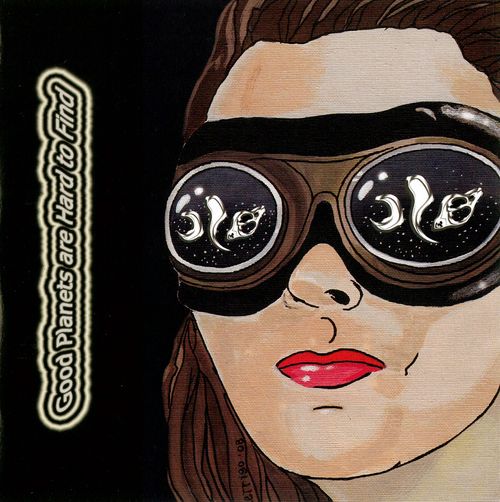
Not very different in overall scope from their previous official album though; but more maintaining the qualities of that one. Smooth transitions and evolvements is a key feature in these snippets of studio jams assembled into six tracks here; and if memory serves right there are less synths and keyboards involved this time around than on previous occasions. Also worth noting is the raga-inspired sitar that is the key element in the tracks opening and closing this excursion.
Still, a mostly bass and guitar dominated affair embellished with careful use of spacey synths and organ still makes for some trippy space music; where the main negative asset is that the segments where the band seems to be searching for a main direction still get to be a tad lengthy. Once in their stride they are impeccable though; and the last half of final track MTSST must be amongst the strongest material I've heard of this outfit.
If improvised space rock jams sounds like a good thing to you, this is a very good place to start exploring this particular brand of music.
Songs/Tracks
1. Good Planets Are Hard To Find (9:43) 2. Space Fountain (8:51) 3. Orbital Elevator (16:12) 4. Pf747-3 (19:36) 5. My Heel Has A Beard (6:01) 6. MTSST (19:28)
Total Time: 79:51
Line-up / Musicians
- Tobias / guitars - PIB / drums - Thomas / bass - Jocke / bass - Luz / percussion - Mogens / Hammond, synths - Dr. Space / Synths - KG / sitar, guitar, Hammond
This is way more relaxed than many albums beforehand, the groovy, partially jazzy vibe is nearly gone here, except on the closing Neptune Rising maybe. And indeed, the line up saw a major change, as there is the complete PAPIR crew involved this time, additionally Americano Daniel Lars, who had his first trip ever to Denmark for playing with the ORESUND SPACE COLLECTIVE. Only synthesizer wizzards Mogens and Scott (Dr. Space) are staying, acting restrained though, 'Organic Earthly Flotation' is yet another album which works more guitar laden.
Walking On Clouds manifests in two sections, originally developed by Daniel, that means you can't really say that the music is completely improvised. Backed by a solid rhythm branch this is smooth, cheerful, featuring nice inspired guitar interplay, partially enriched with spacey patterns as well as chirping synths. Not quite a spectacular album - as I'm familiar with the complete studio discography - but surely something to dig. 'Organic Earthly Flotation' again proves their ambitious approach to update the sound with every entirely new production. Review from Progarchives.com
Songs / Tracks
1. Walking on Clouds (19:23)
2. Walking on Clouds (Pt.2) (6:17)
3. Carlos on the Moon (16:57)
4. Neptune Rising (5:08)
Total Time 47:45
Line-up / Musicians
Mogens - Synthesizers
DR. Space - Synthesizers
Kristoffer (Papir) - Drums
Nicklas (Papir) - Guitar
Pär (Sgt. Sunshine, Carpet Knights, Hoofoot) - Bass
Daniel Lars - Guitar
Christian (Papir) - Bass on Neptune Rising
Actually, these are nine live men on earth jamming, improvising and creating a trip to several places. What I love from Oresund Space Collective's music is how it introduces us into other worlds, one new song is one new world, and each and every of them has its own passages, its own lands in which we will imagine, discover, trip. I believe when music can produce these things on the listeners, then it simply succeeds, and that has happened with me.
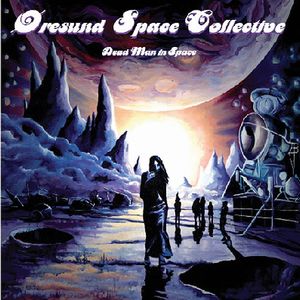
This collective released in 2010 an album entitled "Dead Man in Space" which consists of four songs that make a total time of 63 minutes. As usual, they bomb us with some long jams that let us expand our minds and experience spacey trips. The best example is the first track which is a long 32-minute length song full of synthesizers, guitars and spacey nuances and atmospheres. Here, though we will find several minor changes, we will not find moments where the music dramatically falls or becomes anything new, no, here they create a very cool long jam that perfectly flows and does not bores at all.
In spite its long duration, one can easily listen to it without feeling the need of skipping it after some minutes, because it little by little traps you until you become part of it and cannot escape until the very end. There are always drums accompanying the prominent synthesizers, while the bass creates a sometimes soft, sometimes faster mood that is perfectly complemented by the almost non-stop guitar work. There are of course moments more interesting than others, but in general, this ambitious 32-minute song left me satisfied. In fact, I would honestly had enough with this long theme and another shorter one.
"Who tripped on the C(h)ord" is a ten-minute song with a more relaxed mood, perfect for the night or a tired day. The music once again flows without a problem, creating nice atmospheres, soft passages in which the listener can be doing any work needed, I mean, you can lie on your bed and rest, you can be working, doing homework, reading, etc. and the music will not harm you at all, on the other hand, it is your friend and works as a partner, it may be a positive distracter.
A new element is added in "Space Jam 2.2." where since the first seconds we can listen to a delicious rhythmic saxophone. Seemed that it would only appear in the introductory moments of the song, however it actually has a main role here, accompanying the "basic" instruments during the whole jam. Here we can also listen to an addictive and more participative bass, while as usual, the drums, synths and guitars create landscapes, spacey effects and a diversity of textures. A thing that makes this song different, is that here we can clearly appreciate different passages, some faster and more emotional than others, where the progression is evident, putting dynamism to the track, offering a quite interesting creation.
The last song truly contrasts with the previous, because it is only a three-minute improvisation that works as a closer, nothing more. Well, as you noticed I am like this album, which stands in the top (maybe second) of my OSC preferences. My final grade will be four stars.
I think if you liked their previous album "The Back Tomato" then you should like this one. The music here was actually taken from "The Black Tomato" sessions, as they had around 150 minutes of music left over. So once again lots of guitars and synths, and the bass and drums are also very prominant.
"Substantia Nigra" opens with bass, drums and guitar that build including frog-like sounds (synths). A full sound after 3 minutes. A very repetitive track. "Optic Chiasm" opens with funny sounds with synths. Guitar and bass follow. Organ before 6 1/2 minutes. The guitar is great after 13 minutes, just lighting it up. "Fornix" opens with a beat and synths. It kicks into a groove after a minute. Nice chunky bass on this one. The guitar starts to grind away too. Then it turns sort of trippy with drums, deep bass liines and synths.
"Aqueduct Of Sylvius" features synths that twitter as guitar joins in. Bass is next. Drums after 2 minutes. The guitar gets fairly aggressive. Intense later on. "Vermis" opens with spacey synths. Guitar 2 minutes in. A steady beat after 6 minutes as the guitar solos. Keyboards after 11 minutes and some great sounding bass after 13 minutes.
Keep in mind that we have up to four guys playing synths and three playing guitars, so we get a nice full sound on this album for the most part. Not as good as "The Black Tomato" so a low 4 star rating it is. Review from Progarchives.com