Showing posts with label Avant Progressive. Show all posts

Tuesday, 7 October 2014

Univers Zero - Heresie (1979)


 Having thought the debut album was unsurpassable the boy's go one better on this one. Denis's 'La Faulx' is a slow builder, the textures at the beginning are rich with wheezing bass Harmonium and Michel Berckmans Bassoon whilst Bassist Guy Segers incants in the background. Tracks 2 & 3 are the work of Roger Trigaux, later to produce a solo album called 'Triskadecaphobie' under the band name of Present. Entitled 'Jack the Ripper' & 'Vous le Saurez en Temps Voulu' once again Roger and the band excel themselves. Play it in the dark if you dare!

The music is incredible dark,sombre,as depressive as can be.Pessimism to the max!If someone informated me well than I believe that the texts are spoken in the languages of druids.Together with the slow creeping cello's and bassoon it createds an incredible anguished atmosphere.

Some people overemphasize the scary boogeyman nature of Univers Zero (usually to promote their virtues), I think, but certainly their music is quite moody and dark, and this is likely their darkest sounding record. All the pieces are slow and ponderous, with sustained, repetitive lines and harmonies that are often "dissonant" to traditionalist ears. Certainly you can hear the influence of interesting European composers like Bartok and Messiaen, as well as, if not Zeuhl, the same sort of avant-jazz sources as Magma was tapping. Reeds and strings are the lead instruments, making this more of a jazz/chamber fusion than anything to do with rock music in the usual sense. The kind of music that would be good scoring a old silent horror movie, this is definitely a classic of its genre- I have to be in the mood for it, but it fits that mood perfectly.Reviews from Progarchives.com


Songs / Tracks Listing
 1. La Faulx (25:18)
2. Jack the Ripper (13:29)
3. Vous le Saurez en Temps Voulu (12:56)
4. Chaos Hermetique (11:51) *


Line-up / Musicians Lineup on the original album:

- Michel Berckmans / bassoon, oboe
- Daniel Denis / drums, percussion
- Patrick Hanappier / viola, violin
- Roger Trigaux / guitar, piano, organ, harmonium
- Guy Segers / bass, voice

Lineup on the bonus track on the 2010 remaster:
- Daniel Denis / drums
- Patrick Hanappier / violin
- Guy Segers / bass
- Roger Trigaux / guitar
- Vincent Motoulle / keyboards

Monday, 28 July 2014

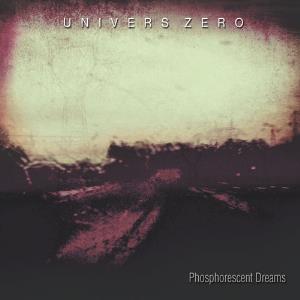
Univers Zero - Phosphorescent Dreams (2014)


Wow, this could be disputably the band's longest album title to date after their Ceux Du Dehors. Does this spell a change of attitude? Well DD certainly changed a few things in his lifelong project and maybe the most shocking one is the change of label. I'm still at odds at guessing why Daniel thought that he would get a better support than Feigelbaum's Cuneiform label, but the resulting album is not only a very expensive album, but it is not well distributed and not available widely on the web? and not at all in brick & mortar record store. Past that first consideration, the band's line- up has been revamped, with ex-PaNoPTiCoN and present day Wrong Object keyboardist Antoine Guenet and on guitar Nicolas Duchêne. Elsewhere, Dimitri Evers (bass, and Budé (winds) are alongside Daniel, but we're also seeing a few guests, such as sonny Nicola on drums for a track, and a horn section comprising of Hugues Tahon (trumpet) and Adrien Lambinet (trombone) on three tracks. Recorded and mixed at Didier De Roos's installations in Braine and Soignies throughout the second part of 2013, PD was released in January of the following year, with a post- atomic (or stormy) artwork, courtesy of Thierry Moreau.

Well, the corridor noises were that UZ's sound was (finally?) going to change a fair bit with the line- up changes and an electric guitar in the fold. The leastr we can say is that the sonic changes are not immediately audible, and maybe the prime culprit is the unchanged songwriting. Indeed seven tracks, ranging from almost-5 to almost-13-minutes, composed by Daniel (4 of them) and Kurt Dubé (the remaining three) are not much of a change in the light of UZ's overall discography. Are we looking at Clivages' obvious successor or at an Implosion-like venture? Little doubt that from the first notes of the 10-mins Shaking Hats, you're looking more at the first option than a divergence from the Universal (and absolute) Zero. Despite DD's French and Japanese liner notes as to turn the band to a more "electric sound" to remedy to what he was seeing the band's stagnation (my words, not his).

Technically, the electric guitar and keyboards (Pierre Chevalier was playing on digital synths anyway), but it's not like it brings a major contribution or change the band's soundscapes a great deal. My guess is that DD's near-pathological perfectionism saw that the band's impetus was waning and thought a revamp was needed. For the audible results on the album, I find the changes so un-remarkable that the risk he took angering the "sacked" long-standing Chevalier and Berckmans not worth it. I'm sure the former got over it (he's a busy man), but not nearly as sure for the later. As with the preceding Clivages and the anterior Implosion, UZ's general mood is relatively lighter than it was in the 80's and 90's, and though I wouldn't qualify PD of light-hearted danceable music, there are moments where a certain warmth reaches your vicinity. Of course, this doesn't apply for the sinister title track.

The big debate around RIO-heads is whether the very-high price of the album (and its shipping from Japan) is worth the investment. Obviously, if you're an unconditional UZ fan, it will be worth the important hassle and costs, but if you're a little more objective, you'll think twice or thrice before doing so, especially if you know that, outside the slight line-up change, Phosphorescent Dream is yet another "normal" UZ album. As such, I don't find it essential per se (the last to date was Implosion, IMHO), but it's a very worthy album nevertheless.Review from progarchives.com

Songs / Tracks Listing

1. Shaking Hats
2. Rêve Mécanique
3. Très Affables
4. Vocation
5. Les Voleurs d'Ombre
6. L'Espoir Perdu
7. Phosphorescent Dream

Line-up / Musicians

- Kurt Budé / clarinet, bass clarinet, alto and tenor saxophones and percussion
- Daniel Denis / drums and percussion
- Dimitri Evers / electric and fretless bass
- Nicolas Dechêne / electric and acoustic guitars
- Antoine Guenet / keyboard

Guest musicians:
- Nicolas Denis / drums and percussion (3)
- Hugues Tahon / trumpet (2, 6 & 7)
- Adrien Lambinet / trombone (2 & 6)

Saturday, 2 February 2013

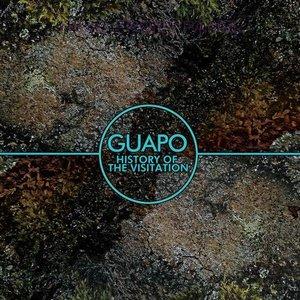
Guapo - History of the Visitation (2013)


Back in ancient music history (circa the late '90s), Guapo were regarded by some as "playful." After various lineup changes and albums like 2013's CD/DVD set History of the Visitation, this does not seem to be a particularly playful group -- unless a darkly hued outfit like Univers Zero could be considered playful. Now a quartet with drummer David J. Smith the only original member, Guapo are identified with the 21st century resurgence of Rock in Opposition avant-prog, a style/movement/community of which UZ were founding contributors during the late '70s. Whether Guapo consciously considered themselves part of the RIO lineage from the start, they seem willing to draw from the dark side of that lineage on History of the Visitation -- while incorporating myriad other musical elements into their proggy instrumental blend. The five-minute buildup of ominous orchestral tones and textures comprising the "Visitation" intro to 26-plus-minute album centerpiece/behemoth "The Pilman Radiant" culminates in a slow and eerie melodic fragment echoing not only a similar bit from "Jeweled Turtle," the leadoff track to Guapo's previous album, 2008's Elixirs, but also the equally unsettling start to "The Funeral Plain" from UZ's 1986 Heatwave. A deep irregular throbbing drone underpins sustained metallic oscillations -- as at least some of the album's seven guest musicians on a variety of reeds, brass, and strings are slowly buried by the onslaught -- before "The Divine Vessel" continues the suite with initially waltzy understatement; the Fender Rhodes of new keyboardist Emmett Elvin (replacing Daniel O'Sullivan) is supported by drummer Smith and bassist James Sedwards before guitarist Kavus Torabi burns his way into the arrangement with a sustained tone and deliberate ascending melodic line. Elvin rips into dramatic organ chords before the band plunges into a full-on rapid-tempo bridge and a rhythmically shifting space jam melding the introduction's ambient roar with an insistent hard rock pound and Fripp-ish repeating guitar line. "The Pilman Radiant" alternately slams, gallops, (intentionally) stumbles, and floats through its second half before returning to its midpoint theme, as Guapo display their affinity for "Larks' Tongues" and "Fracture"-era Crimson over UZ's more chamberesque side. "Complex #7" is another dark ambient foray into the "Visitation" zone, but the concluding "Tremors from the Future" is an altogether different machine, cruising through uptempo and even catchy segments -- Elvin's staccato attack on the keys would be downright funky if he were playing a clavinet. The companion DVD of Guapo live (with O'Sullivan on keys) is dominated by a very professional multi-camera video -- in arty black-and-white -- of the band performing "Five Suns" at NEARfest 2006; the performance careens toward proggy bombast, with Torabi in particular throwing himself into his (foot)work. Despite its inferior single-camera video (but fine audio mixing/mastering by Udi Koomran), the band's sparkle-shirted performance of Elixirs' "King Lindorm" at France's RIO festival the following year is a more nimble affair, with a greater measure of "avant" poured back into Guapo's avant-prog mix. ~ Dave Lynch review from RDIO

Songs / Tracks Listing

1. The Pillman Radiant (26:15)
i. Visitation
ii. The Divine Vessel
iii. Wriggling Mange
v. Divine Vessel's Repreise
2. Complex #7 (4:47)
3. Tremors from the Future (11:1

Total Time: 42:17


Line-up / Musicians

- Emmet Elvin / Fender rhodes, organ, synth, harmonium & screeching guitar (on "Visitation")
- James Sedwards / Bass
- Kavus Torabi / Guitar, santoor
- David J. Smith / Drum kit, percussion, additional keyboard, sanitoor

Sunday, 18 November 2012

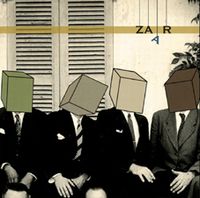
ZAAR - ZAAR (2006)


This French prog rock quartet, rising out of the ashes of Sotos, is built around brothers Yan Hazera and Michael Hazera on lead guitar and drums, respectively. The single-named Pairbon replaces Sotos' bassist, Bruno Camide; the cello and violin from the earlier group are replaced by a hurdy-gurdy played by Cosia (another single-named musician). Historically, the legacy of Magma has lain heavily on most French instrumental prog rock groups, but the Hazera brothers lighten up Magma's relentless, apocalyptic zeuhl sound with lots more space and some short acoustic pieces that demonstrate a refreshing willingness to move outside conventional prog rock boundaries. There are parallels here to Univers Zero's best work, especially on "Scherzo # C," where shifting time signatures and dissonant contrapuntal riffs create a challenging type of chamber rock. The two long pieces on the CD provide plenty of scope for drama, but both "Sefir" and "Omk" utilize a number of quiet interludes to both ratchet down the intensity and create expectations for what follows. As a result, the "payoff" becomes not the shrieking climax but, rather, all the adventures along the way. Cosia's use of the hurdy-gurdy is particularly creative on the opening piece. Although this instrument has folk and even medieval classical roots, the hurdy-gurdy on this CD seems to be subjected to various electronic treatments and some "outside" playing that occasionally suggests a small animal in distress. Indeed, Cosia's first solos almost seem to be generated by a Moog synthesizer or electronic oscillator, although he also displays the instrument's ability to produce bagpipe-like drones and later shows off its violin timbres (in essence, the hurdy-gurdy is a mechanical violin). It's hard to believe that all these sounds are generated by a single instrument (even a really strange one), although nothing on the CD cover or liner notes indicates otherwise. Overdubbing is a distinct possibility, of course -- and with all the contemporary devices available for a guitar to plug into, Yan Hazera could also be responsible for some of those mystery sounds. The second long piece, "Omk," reverses the roles initially, with Hazera soloing and Cosia providing the backing drone, but then Cosia takes over again with a moody solo that hovers between scraping violin and wheezy pump organ. Both long pieces also showcase the excellent staccato attack of drummer Michael Hazera, whose work can move beyond simple (or even complex) timekeeping and into improvisational territory that owes more to jazz than rock. This is a very sophisticated recording that deserves a wide audience. ~ Bill Tilland

Songs / Tracks Listing
1. Sëfir (20:07)
2. Zolg (1:59)
3. Ce n'est pas triste (2:42)
4. Tougoudougoum (1:29)
5. Discasambo (3:23)
6. Omk (17:20)
7. Scherzaaah (0:38)
8. Scherzo # C (4:45)
9. [...] (1:34)

Total Time: 53:54

 Line-up / Musicians
- Yan Hazera / guitar
- Michael Hazera / drums
- Cosia / Hurdy Gurdy
- Pairbon / bass, double-bass


Saturday, 17 November 2012

Guapo - Five Suns (2004)


This must be one of the most original releases I've heard since long time. Although I do recognize some elements from King Crimson's red and vroom period or even Anekdoten. Still there's more to it. The sound of this instrumental music is in between progressive/psychedelic and postrock from bands like "Explosions in the sky" or "Godspeed". It's post rock because of the melodies that slowly return on and on while the tension is building up. I would call it progressive rock because of the wall of sound and the excellent way the guys are handling their instruments. On "five suns part 2" for example there's the power from the guitar reminiscent to Sonic Youth, the powerful Wetton like bass lines and acrobat drums but on the other hand there's also a tiny sound of a hammond organ and a spooky mellotron. The combination of these very different ingredients gives a splendid result ! Needless to say this music is very basic and sober although quite detailed. Although I never listen more than a couple of songs at once, each track is compelling all the way. My personal favorite may be "Topan", a calm track with emphasis on the gentle Hammond sounds especially on the opening tones. Never heard anything from this band before so I can't compare this record to other Guapo releases but this is a fine and most original effort worth of checking out for those who like some instrumental, dark and powerful music. Prgarchives.com

Amazing album which is like a blistering King Crimson, Ruins and Anekdoten on steroids with heavy bass and full on mellotron, but theres also some excellent lighter progressive moments in here.A band to watch for sure.


Songs / Tracks Listing 

1. Five Suns - Part 1 (4:31)
2. Five Suns - Part 2 (10:19)
3. Five Suns - Part 3 (10:30)
4. Five Suns - Part 4 (12:57)
5. Five Suns - Part 5 (7:55)
6. [untitled] (1:00)
7. Mictlan (8:58)
8. Topan (6:37) 

Line-up / Musicians 

- Daniel O'Sullivan / Fender Rhodes, organ, Mellotron, harmonium, guitar, electronics
- Matt Thompson / bass, guitar, electronics
- Dave Smith / drums, percussion 


Sunday, 4 November 2012

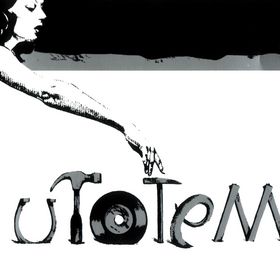
U Totem - U Totem (1990)


A Revelation.

Ever had one of those?

I had a few during my life; most occurred during dark, depressing or desperate times; others happened while listening to specific albums.

One such album was this one.

This revelation consists of the understanding that imagination and daring to explore are one of the great human traits; Understanding that music, at its most beautiful, whether complex or simple, can be a healer, a comforting friend, a motivator; Understanding that music can be a reason to live for, a purpose in life, a cause to get up in the morning and keep on living despite hardship.

Musicians from 5UU's and Motor Totemist Guild came together to create this masterpiece of an album and joined by other session musicians to complete the sound. I am having hard time expressing just how wonderful and special I find this album to be. It is one of those albums I feel a sort of catharsis while listening to it and want to start it over again when it ends. However, I feel un-equipped and not knowledgeable enough to write about this, but since I love this album so much, I'll give it a try and please forgive any mistake or nonsense I might write.

Instrumentation - Abundant and varied instrumentation makes this album a delight to listen to; so rich and smooth is the sound, along with Emily Hay's vocals. Saxophones, flute, piccolo, bassoon, contrabassoon, sitar, piano, vibraphone, guitar, bass, drums, percussion and the use of tape recordings - all those play the music, making it lively and special. Not only the type of music, the influences on composition, but the type of instruments are a look back at their influences which are I would guess 20 century composers (I am not an expert on this at all, but having read about and listened to some I would assume this is the case; Stravinsky would probably be one) and previous chamber rock groups.

The music has been said to be a mélange of 20th century classical music, avant-garde, rock, chamber music all mixed to an end result that is the special sound of U Totem. Well, yes but how to translate the greatness of this album into words? Complex, very well played, sophisticated and compelling, the music never ceases to amaze me. Just listen to "Both Your Houses" and how all the instruments combine together while the rhythm goes on. Not only shown by the complexity, the progressiveness of the music is shown also in how they ornament the songs with the instruments; in the intervals which are filled with the occasional "odd" sounds, atonal parts or "experiments"; they drift away with each song from the main theme to explore the grounds. Each song is cleverly orchestrated, maneuvered through the gushing waters, from one part where the classical instruments lead the way, into other parts, where the more "modern" rock instruments take over. With all this going about, the beauty is kept, the connecting musical thread is always there and the magic is never lost. The repetitive part in "Both Your Houses" around the fourth minute (before and after Emily screams her heart out in the background) is a fantastic example of how to play the same theme and make it sound great by changing the instruments and using whatever comes to mind (and using slightly different scales to create a seeming disharmony). Brilliant!

Take for instance "One Nail Draws Another" with its almost 15 minutes. It goes through so many different parts, uses so many elements of their influences, and yet there is not one boring moment, there is continuous movement, and constant progression while going back to visit the same themes as the song goes. Emily's vocals and the male opera-like vocals joining in the middle add to the richness already found in this song.

"Two Looks At One End" and Yellow Umbrella Gallery show their more modern influences, their avant-garde and quirky side (as if it wasn't enough as it is) and their use of the tape recordings and manipulation of the keyboards. Engaging and dynamic, weird and sometimes disharmonic, these pieces are enriched with the seemingly random use of the recorded sounds and voices and Emily's vocals (on that first track of the two).

Another thing to praise here is that each song is easily identifiable and different than the others. I don't sense a repetitiveness and yet the collection of songs and tracks fit very well together; each song brings its own approach (however slightly or not-so- slightly different than the others), making this collection of 7 songs feel as a whole - meaning, this feels like an album, and not like a collection put together.

This album might lead you to the US side of avant-rock/chamber-rock, if you haven't "visited" these realms already. Both the "donating" bands to U Totem are obvious bands to explore (although I much prefer this group or project), as well as Thinking Plague, whose In Extremis I think draws somewhat of an influence from this album.

To sum up, this is one of my all-time favourites. An album as rich in sound as it is special, complex, intriguing, thrilling, stimulating, exciting and whatever other adjectives you may want to add to it. Their sound mingling together music by 20th century composers, chamber rock and avant-garde is one that I treasure, and find beautiful, compelling. It was a revelation the first time I heard it; being struck by the combination of complexity, oddity and beauty, realizing how fantastic music can be when musicians take it to a ride through their wild imaginations and perform for us their vision.

Honestly, my words cannot do justice enough to this fabulous album and these fine musicians and composers. Reading this, I feel I have failed to pass on what goes through my mind when listening to this and more importantly what the music actually sounds like and how great it is. So I'll simply say that if you are a follower of this type of music, this is a must have album. If you are interested in checking this type of music, but don't yet feel comfortable enough in it or are new entirely, I would start elsewhere, and save this to later on when you can appreciate it fully and without trying to adjust to this type of music. It might take the pleasure of the album. But this is a mandatory stop station in your excursions throughout the avant-rock/chamber-rock (or whatever you want to call it) realm.

A must have!

Review from progarchives.com


Sunday, 18 September 2011

Art Zoyd - Le Mariage Du Ciel Et De L'infer (1985)

Art Zoyd Le Mariage Du Ciel Et De L'Enfer album coverIf I were in charge of organizing a ballet, one of the very last bands on the planet whom I would think of for scoring it would be Art Zoyd. Still, it's diversity that makes this world a better place. Roland Petit, who knows a hell of a lot more about ballet than me, did indeed do just that, immediately after seeing the Zoyd perform on television. As will probably be guessed by those already familiar with this band, the music may not always be 100% dark, but it can be counted on to be 99.9% uneasy. As this album demonstrates, the band is no less than masterful with subtle arranging and a penchant for building slow-burning tensions that might unceremoniously be pulled out from beneath the listener at a moment's notice.

The first composition, "Sortie 134 - Part 1" is a classic representation of what the band is all about, displaying a strong Bartok and Stravinsky influence and also musique concrete elements (e.g., the sampled children's laughter). The climax features Zaboïtzeff's doomed vocals getting drowned in a sea of organ lurches, piano stabs, chiming clock noises, and a 1-2 percussive pounding.

If you think the polyrhythmic activity of King Crimson's "Thrak" was challenging, then sink your flimsy teeth into "Cryogenèse - Rêve Artificiel." Two particular sections come to mind. One is right at the beginning, with accented notes against a (required...believe me) metronome ticking away. Seventeen beats in, the first accented note occurs. This is followed 10 beats later by a double-accent, then a single accent 9 beats after that, and a double accent in-between the 9th and 10th beat after that, before the cycle repeats. Then there's the section that begins at 4:56. Here the metronome clicks off a 31-beat cycle, with accents on the 1st, 3rd, 6th, 12th, 16th, 21st, and 24th beats. After one of their trademark lengthy, dynamic buildups with triplicate polyrhythms and sinister organ chordal washes, the music suddenly gets flushed and the 31-beat pattern played over with a five-beat lag, before everything is eventually overtaken by various animal sounds, lawnmower-like drones, and asthmatic breathing. See why I wouldn't think of this band to score a ballet?

For the most part, the "Io" and "Mouvance" pieces constrain themselves to one theme with a firm use of repetition; thus, they are more immediately accessible. Out of these, I am particularly taken with "Io 1," a simple utilization of the Leading Whole Tone scale (C-D-E-F#-G#-A#-B-C), combined with other-worldly trumpet from Soarez. If Miles Davis had sat in with Univers Zero, this undoubtedly would be what the resulting music would sound like. The brisk rippling of keyboard notes on "Mouvance 2" are effectively contrasted by the neurotic staccatos that open up "Mouvance 1."

After these short pieces forming the middle of the album, "Cryogenèse" (the return of the dreaded metronome!) gets magnificently revisited, by its end overloading the listener with a pure sense of dread. The album closes with a coda ("Sortie 134 - Part 2"). Not awful by any means, but with its drum machine and jarring, techno feel, it represents the least of the moments on this disc.

Overall, though, the music on Le Mariage du Ciel et de L'Enfer is terrific and ranks among Art Zoyd's best work. Texturally, it is an optimal balance between their increasing incorporation of electronic timbres in the 1980s with their earlier, more organic period. The music also balances their level of compositional sophistication that easily holds its own with contemporary classical music, while at the same time being reasonably digestible for new listeners. This album represents an excellent inroad for those interested in exploring Art Zoyd's output. I don't know how the ballet was received, but from the picture shot included in the CD, it looks pretty wild and I would have loved to have seen it. Incidentally, Petit also hired another prog-related band in the early 70s to compose and perform one of his ballets (hint: their name ended in "-oyd," too). Ground and Sky review - Art Zoyd - Le Mariage du Ciel et de L'Enfer

This was released as a double album back in 1985 and was the music for Roland Petit's ballet called "The Marriage Of Heaven And Hell".It's hard to believe this was used as music for a ballet,although Petit was known for his theatrical productions.He apparently saw ART ZOYD on television and so contacted them about doing this.I must say i feel very fortunate to have this cd as it is the last of their chamber music period before they went heavily into electronics.This is the only one of their early period that is not out of print yet,and it's one of their best.I got my copy at "Wayside Music".What's it sound like ? Well my favourite place to listen to music is in my truck on my hour drive to and from work. I listen to the longer cds like this on my way home because i can take my time and go the long way.I've been listening to this all week at work and one customer gave me a hard time about it saying i should have Christmas music on instead of this depressing stuff,i decided to let him live.So tonight on the way home in the dark i had a careful listen to this recording.The closest reference in my opinion is UNIVERS ZERO,in that this is very intense and dark.This is more minimilstic and experimental but every bit as good,in fact i like it better than UNIVERS ZERO's early works. "Sortie 134(Part 1)" opens with a lot of tension as dual piano melodies and trumpet lead the way before it calms down and we can hear children laughing.Some violin and piano before a full sound comes back 3 minutes in that comes and goes.A change before 6 minutes as we get lots of percussion and piano.Vocal melodies before 8 minutes.This is intense!Great track ! It ends with children laughing again as it blends into "Cryogenese(Reve Artificiel)".The sound of a metronome ticking can be heard as trumpet blasts and piano comes in.A change 3 minutes in as the metronome stops and the trumpet and piano continue.Again this is so intense.Another change 5 minutes in as metronome returns with piano.I'm reminded of UNIVERS ZERO 6 1/2 minutes in.Trumpet a minute later.Actually an outbreak of trumpet 9 1/2 minutes in goes on for a minute.It becomes so intense and unrelenting.Another change 14 1/2 minutes in as some strange sounds replace the trumpet.Sounds like synths 16 1/2 minutes in as the piano stops.What a ride that was. "Io 1" features sax melodies that are at time dissonant. "Io 2" is eerie and haunting.A cool rhythm with sax comes in that stops and starts.I like this one. "Io 3" opens with almost a pulsating sound as violin comes in.It stops and then continues but this time piano is added.It stops again and restarts.This part is kind of spooky.Vocal melodies join 4 minutes in. "Mouvance 2" incorporates these wonderful piano melodies.A full sound before 3 minutes. "Mouvance 1" features more piano but it's more aggressive.Trumpet comes in tastefully as we again have two pianos being played.The intensity is removed as the song settles down.Violin comes in as piano quietly plays on. "Cryogenese(Les Portes Du Futur)" opens with outbursts of piano.Percussion comes and goes.Organ and trumpet 1 1/2 minutes in.The outbreaks come back.Violin 3 1/2 minutes in.Vocal sounds.Metronome comes in.Organ 7 minutes in.The rest of the song is fantastic ! One of the best part of the album.It has more of a melody with trumpet blasts,piano and organ. "Sortie 134(Part 2)" has a good beat, and the children laughing are back.Vocal melodies and speaking as well.Great ending to this album. When i finished listening to this i thought to myself "Was that just a bad dream i had ?" ART ZOYD have just been put near the top of my favourite Rio-prog band list.Get this record !! ART ZOYD Le Mariage Du Ciel Et De L'Enfer music reviews and MP3


Songs / Tracks Listing
1. Sortie 134 - Part 1 (11:00)
2. Cryogenèse - Rêve Artificiel (18:12)
3. IO 1 (3:51)
4. IO 2 (2:15)
5. IO 3 (5:15)
6. Mouvance 2 (3:34)
7. Mouvance 1 (5:54)
8. Cryogenèse - Les Portes du Futur (14:30)
9. Sortie 134 - Part 2 (3:48)

Total Time: 68:19
Line-up / Musicians - Patricia Dallio / electric piano, grand piano, keyboards
- Gérard Hourbette / viola, violin, electric piano, grand piano, keyboards, percussion
- Jean-Pierre Soarez / trumpet, percussion
- Thierry Zaboitzeff / cello, bass guitar, voices, tapes, keyboards, percussion
- Didier Pietton / Soprano saxophone


Art Zoyd - Sortie 134 - Part 2


Download Mp3

Sunday, 27 February 2011

Guapo - Elixirs (2008)


After two amazing albums "Five Suns" and "Black Oni", both of them virtually impossible to beat or equal, Guapo kept evolving and creating great avant-prog music, which ultimately was delivered in their 2008's album "Elixirs". With a permanent guitar player and a new bassist on board, Guapo now reveals itself as an ensemble decided to explore predominantly subtle atmospheres and deceitfully relaxed. The post-rock element had been a nuance in "Black Oni", but in "Elixirs" it has become a relevant presence in the band's refurbished sound. This is still genuinely zheul, but clearly with a more elaborate work of grayish textures, not only based on a bigger influence from the post-rock standard, but also Arabic/North African-inspired exotic sonorities. This less explosive approach to Guapo's archetypical exploration of neurotic, dark, disturbing sonic displays helps the band to focus on the mysterious side of their music with an enhanced fruition. This is pretty obvious from the opening track 'Jeweled Turtle', whose initial languid mood feels powerfully focused on the drumming's ritualistic cadence, making it sound like a procession of lost ghosts. The guest violin and viola gradually take center stage until things become patently dramatic, especially during the second half - the additional Arabic undertones reinforce the black magic aura instilled in the track's nucleus. Track 2 'Arthur, Elsie and France' is more vital, set on a jazz-rock scheme for a Magma-meets-Present excursion in which organic tension and cacophony alternate fluidly. The keyboard and bass inputs remind us closely to Guapo's previous albums, but Smith's drumming bears enough versatility and subtlety as to keep things reasonably constrained (yet still explosive). Tracks 3 and 4 are parts of a concept titled 'Twisted Stems', both being sung tracks: 'The Heliotrope' has a slow, relaxing acid-jazz mood that evokes a modernized Robert Wyatt, while 'The Selenotrope' is slightly more oppressive, with a bit of sensuality (something like Portishead-meets-Sigur Rós). 'The Planks' is the briefest and most upbeat piece in the album: with its very ethnic main motif, the band manages to bring an optimistic, catchy vibe without giving up on their penchant for mysterious atmospheres and experimental ideas. The last 15 minutes are occupied by 'King Lindrom', which gets started with a psychedelic deconstruction of Far East moods (I am inclined to notice the legacy of "Ummagumma"-era Pink Floyd and early Amon Duul on this one). Once the electric piano sets the initial cadences for the center section, it won't be long before the whole band displays yet another example of zheul/post-rock tension. Right before minute 8, a new motif arrives to increase and release a sonic power that until now had remained partially latent. The rhythm duo's jazz-inspired labor and the creepy guitar lead deserve special mentions. At minute 11 ½, things return to calmer moods in order to set the pace for the coda (a reprise of the introductory section). While not equaling the electrifying fire of "Five Suns" or the special witchcraft of "Black Oni", "Elixirs" still represents the excellence of Guapo's musical vision - this is likely to become a very featured album in prog circles for the year 2008.GUAPO Elixirs music reviews and MP3 ( Review from Progarchives.com)


Songs / Tracks Listing 1. Jeweled Turtle (13:09)
2. Arthur, Elsie And Frances (10:53)
3. Twisted Stems: The Heliotrope (7:32)
4. Twisted Stems: The Selenotrope (7:45)
5. The Planks (3:11)
6. King Lindorm (15:40)

Total Time 58:10

Line-up / Musicians
- Daniel O'Sullivan / Fender Rhodes, piano, bass, guitars, harmonium, modular synthesisers, autoharp, voice, electronics
- David J.Smith / drum kit, percussion

Guest musicians:
- Sarah Hubrich / Violin, Viola (The Jewelled Turtle)
- Alexander Tucker / Voices (The Heliotrope)
- Jarboe / Voices (The Selenetrope)


GUAPO "Arthur, Elsie and Frances"


Guapo - Jeweled Turtle


Download mp3

Friday, 12 March 2010

Pochakaite Malko - Doppelganger (2006)


The latest offering by this great Japanese band from Tokyo.

Really loud driving fuzzed bass fuels the first song on this album with an unbelievable amount of energy as a mighty doom laden melody of violin and keys splits everything apart. This sets up most of the other tracks which on occasion has lighter folky elements but the sound is most definitely like a heavier Zamla ( they have played music by them!) , King Cimson and Magma all mixed up into a devilshly energetic and frenzied brew.

Favourite track is 'Pluto' which comes across like a fusion of Univers Zero and Present! Mighty powerfull stuff indeed. 'Acid Rain' is another brain blaster too with more great heavy fuzzed bass and manic violin...... like a heady dose of avant King Crimson gone mad.

A Band to watch!!


Songs / Tracks Listing 1. Doppelgänger (3:54)
2. Anna (5:33)
3. Pluto (5:39)
4. Acid Rain (7:36)

Line-up / Musicians
- Junzo Tateiwa / tabla, percussion & drums
- Kazuo Ogino / piano, keyboards
- Shigekazu Kuwahara / bass
- Akihisa Tsuboy / electric & accoustic violin


Thinglink Plugin

ThingLink